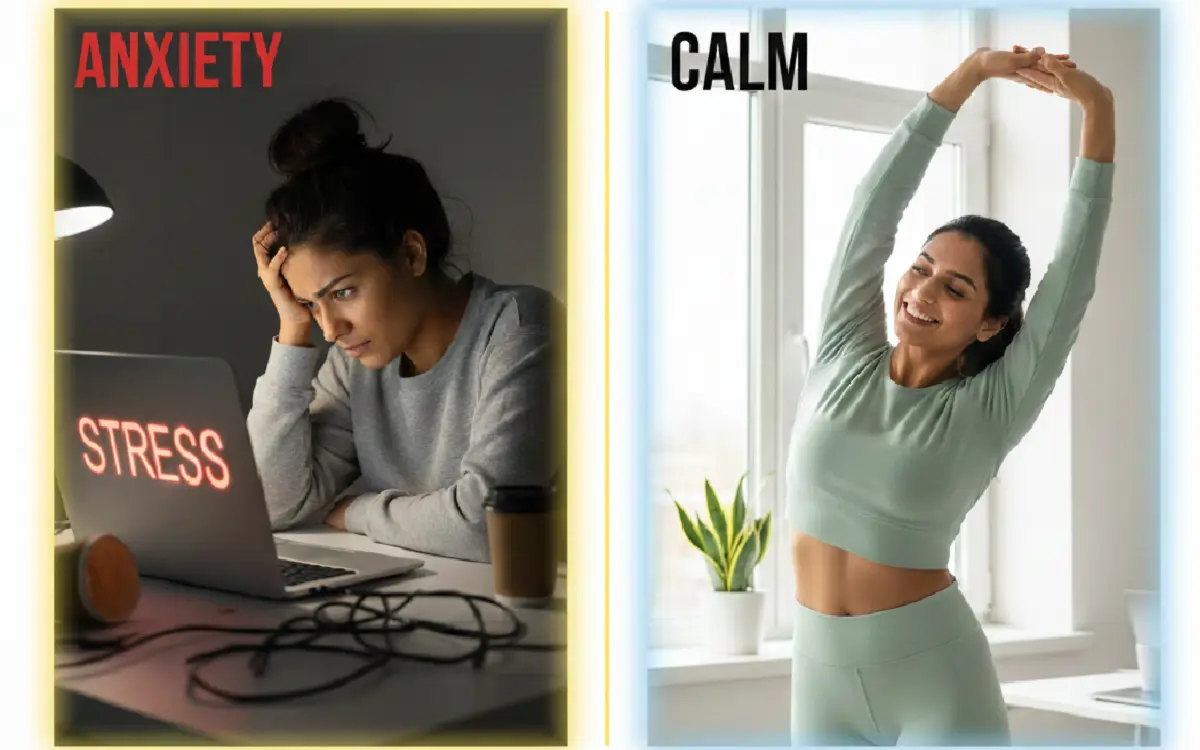
If you are looking for a micro-workouts anxiety mental health guide, you are in the right place. Have you ever experienced that feeling when you wake up in the morning and there is a heavy burden on your mind? It’s as if you have not even started working yet, and you are already exhausted. Till last year, I was also going through this phase. For me, ‘exercise’ meant spending an hour sweating it out in the gym, which at that time seemed like no less than a punishment to me. When anxiety is running through your mind, looking at the expensive gym membership card makes you feel even more guilty.
But then I learned about something that completely changed my life and my mind—it’s called Micro-workouts for Mental Health. It might sound simple, but its impact is so profound that I’ll never go back to the old ways. We’ve all been taught since childhood, “No Pain, No Gain,” but in 2026, that saying is outdated. Real gain happens when your mind is calm and you’re happy.
When Anxiety Hits the Heart: My Struggle with Palpitations
Here, I want to share something I’ve never told you before. Anxiety isn’t just in the mind; it shows in your body. I started having heart palpitations—it felt like my heart was going to pop out of my chest, for no apparent reason. The doctor said it was all normal; it was just stress. But what could I do about that stress?
I noticed that when palpitations started, people would say, “Take deep breaths.” But sometimes just breathing wasn’t enough. I tried micro-movements. When my heart started pounding, I would do wall sits for 2 minutes. This would divert my blood flow from my brain to my leg muscles. Result? My heartbeat would return to normal within the next 5 minutes. This was my biggest lesson: when the mind is out of control, tire the body a little, and the mind will automatically come back on track.
The Science of Micro-workouts for Mental Health
To be honest, we humans weren’t made to sit in chairs. When we sit in one place for hours, not only does our body become lethargic, but our brain also goes into survival mode. This causes brain fog—that strange state where you don’t know where to start. I’ve noticed that when I get up and move around for just 2 or 3 minutes, the fog in my head starts to clear. This isn’t magic; it’s pure science. Our blood circulation increases, and the brain gets the oxygen it is starved for.
Our brain runs on chemicals. When we’re stressed, a hormone called cortisol surges through our veins. This is the same hormone that, in the past, helped us fend off wild animals. But today, there are no animals; there are only office deadlines and bills. Micro-workouts help flush out this cortisol.
Why Small Bursts Outperform the Gym
People often talk about cortisol, our stress hormone. When we’re overly stressed, this hormone builds up in our bodies, leading to insomnia and irritability. Micro-workouts are the fastest way to burn off this cortisol. Imagine you’re writing an email that’s causing you stress. You stop, do 10 squats, and sit back down. Those 10 squats send a signal to your brain that “it’s okay, we’re moving, we’re not in danger.”
I’ve shared health tips on my blog many times before, but this time I’m getting a little personal because this topic is close to my heart. People always chase perfection—the perfect diet, the perfect workout, the perfect life. But the truth is, perfection is a deception. If you move even five times a day for two minutes each, by the end of the day you’ve gotten 10 minutes of high-quality exercise. This is a jackpot for those who say they don’t have time.
My Daily Routine for Mental Clarity
The biggest benefit I’ve found from this lifestyle is that my decision-making has improved. When your mind is filled with anxiety, you start getting confused about even the smallest things. I’ve created a ‘stair rule’—whenever I’m confused about something, I climb three floors of the office and come down. By the time I get back to my desk, I often have a solution. This has helped me understand that movement is not just important for the body, but also for thinking.
Another thing I’ve noticed is ‘digital fatigue.’ We stare at screens all day. Both our eyes and our nervous system get tired. In such a situation, a micro-workout in which you stand on the balcony and simply stretch and look at something in the distance reboots your system. It’s just like restarting your phone when it hangs. Our body also needs a ‘restart’ several times a day.
Can Micro-workouts Improve Your Sleep?
Sometimes people ask me if this improves sleep. My experience says yes. When you expend small amounts of physical energy throughout the day, your body feels a natural tiredness at night—not the kind of mental exhaustion that prevents you from sleeping, but a relaxing tiredness. I’ve noticed that on days when I don’t move at all, my eyes close, but my mind keeps working. This is because the mind is tired, but the body’s energy remains stagnant.
Building Resilience One Minute at a Time
Finally, I’ll just say, don’t make your health a burden. Fitness isn’t just about abs or biceps. Fitness truly means waking up in the morning with a happy mind, a light body, and the ability to face challenging situations without panic. Micro-workouts for mental health are the way to go. They’re short, easy, and best of all—they’re real. Try them; maybe you’ll find the same peace I did. No expensive equipment needed, just a little courage and 5 minutes of your time.
Conclusion: Small Steps, Massive Impact
Friends, the journey of mental health doesn’t always start with big changes. Sometimes, it starts with just 5 minutes of hard work. We often think that unless we go to the gym or run 10 km, we won’t be fit. But the truth is that our mind only demands ‘consistency.’
If you are feeling very stressed today, or your heart is pounding (palpitations), don’t force yourself to work out for an hour. Just stand for 1 minute, take a deep breath, do a few squats, or just stretch. These little “movement snacks” will bring a peace to your life that even expensive medications and therapy can never provide.
Listen to your body, get it moving, and watch your mind become your best friend. Remember, micro-workouts for mental health are not a shortcut but a sustainable lifestyle that will serve you well into 2026 and beyond.
Common Questions People Ask (FAQs)
Q1. Do micro-workouts really help reduce anxiety?
Ans. Yes, absolutely! When you exercise in short bursts, your body releases endorphins, which are natural stress fighters. In my personal experience, 2 minutes of physical activity is the fastest way to break your mind out of a thought loop.
Q2. How many times a day should you do micro-workouts?
Ans. There’s no set rule, but for best results, work out for 3-5 minutes after every 2-3 hours of sitting. Even doing this 4-5 times a day will maintain your mental clarity and energy levels.
Q3. Should I exercise when I have palpitations?
Ans. If palpitations are due to anxiety, ‘light’ micro-workouts like stretching or wall sits are very beneficial. But if you have a medical heart condition, always consult your doctor first.
Q4. Can I do micro-workouts in my office clothes?
Ans. That’s the great thing about it! You don’t need gym wear. You can do chair dips, desk push-ups, and standing stretches comfortably in your office formals.
Q5. Does it also help in weight loss?
Ans. Although our main focus is mental health, research shows that staying active throughout the day (NEAT—Non-Exercise Activity Thermogenesis) boosts your metabolism, which also helps with weight loss in the long term.
Read Also: Mental Health: Key Signs and Natural Stress Relief