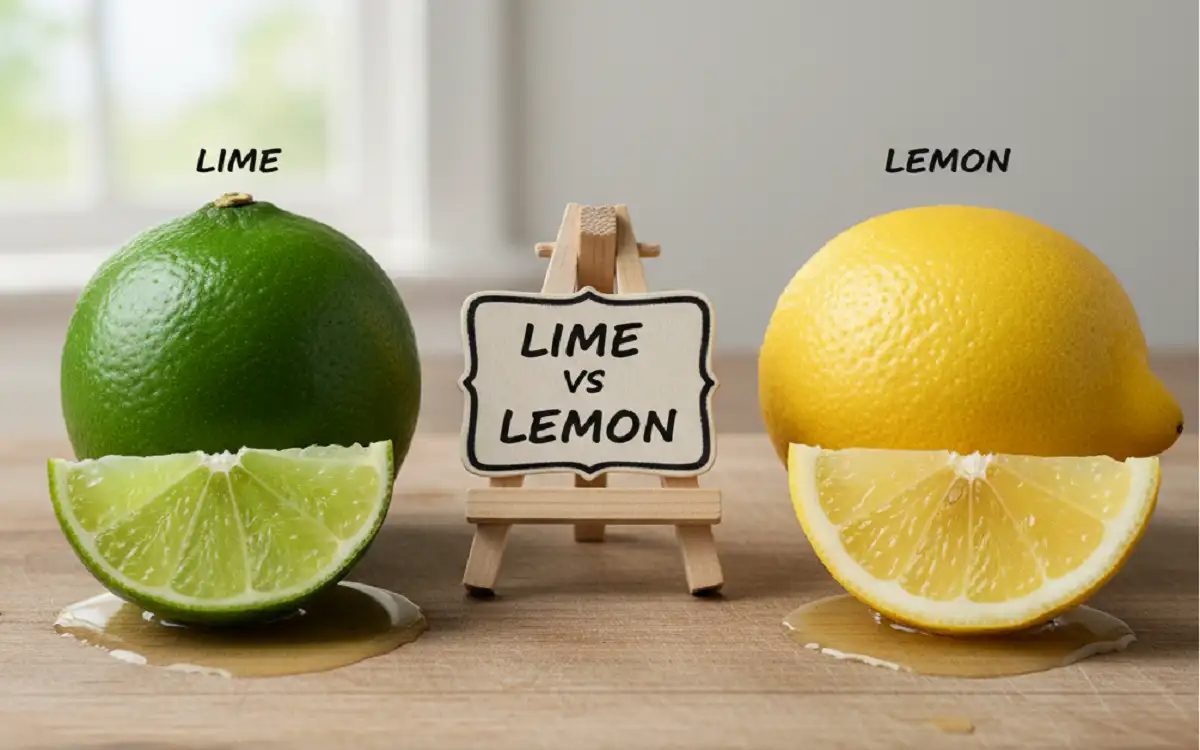
Ever wondered why limes and lemons look so similar, yet why people use them differently? Although they look and taste similar, limes and lemons have some surprisingly big differences. This article will detail these subtle but significant differences from a simple, scientific, and everyday perspective. The purpose of the article is to give you the confidence to quickly identify any fruit in the market and choose the right one.
Introduction: Lime vs. Lemon—Same Family, Different Identities
Limes and lemons are both citrus fruits—like oranges, tangerines, and tangerines. Therefore, their texture, aroma, and sourness may appear somewhat similar. However, subtle differences in botany, taste, color, nutrition, and uses distinguish them. Let’s break down these differences one by one.
1. Lime vs Lemon: Differences in Appearance (Color, Shape, Skin)
Color: The most obvious difference is color. Ripe lemons are bright yellow in color. While many lime varieties range from dark green to yellow-green, some varieties can be completely yellow but are generally considered green.
Size and Shape: Lemons are typically large and oval/oblong. Limes are small and round or slightly flattened.
Skin Thickness: Lemon bark is often thick and rough; oil sacs are deep within its skin. Lime bark is thin and smooth, and the peel often peels easily, even at the navel.
These external signs help with everyday identification, but there is sometimes overlap between varieties in the market—so consider taste and smell as well.
2. Lime vs Lemon: Taste and Aroma Comparison
Sourness: Limes are generally more tart and sharp—their sourness is more intense and pungent.
Sweetness/Bitterness: Lemons have a mild sweetness and a mild bitterness, so lemon juice and zest (the hard part of the peel) are preferred in many sweet dishes and baked goods.
Aroma: Limes have a fresh, green, and tangy aroma, while lemons have a milder, softer aroma.
Note: Flavor may vary depending on the variety—some limes are sweeter, while others are more sour. But these are the practical differences in general cooking.
3. Culinary Uses: When to Use Lime vs Lemon
Savory Dishes: Due to its sharp sourness, lime is often used in guacamole, salsa, seafood, cocktails like beer/margaritas, and many Asian dishes.
Sweet and Bakery Uses: However, lemon juice and peel zest are widely used in pastries, cakes, tarts, marmalades, and drinks (lemonades) because the lemon flavor balances well with practically anything sweet.
Marinating and Preserving: Both are good for meat, seafood, and salads, but if you want a sharp, green tang, go for lime, and for a balanced, mildly sweet tone, go for lemon.
Small Tip: If a recipe calls for just “lemon” and you only have lime, you can use it, but reduce the amount slightly, as lime is more tart.
4. Lime vs Lemon Nutrition and Health Benefits
Both are good sources of vitamin C and contribute antioxidants, folate, and potassium. The differences are subtle:
Vitamin C: Lemons often contain slightly more vitamin C (but the difference isn’t significant).
Calories and Macronutrients: Both are extremely low in calories and have negligible protein/fat.
Phytonutrients: Both contain flavonoids and phytochemicals, which may provide anti-inflammatory and immune-supporting properties.
In practice, both offer great health benefits—for example, drinking lemon or lime in lukewarm water in the morning is a common home remedy (although any medical advice should be consulted with a doctor).
According to Healthline, both lime and lemon are rich in vitamin C and antioxidants.
5. How They Grow: Common Lime and Lemon Varieties
Climate and Cultivation: Both prefer tropical and subtropical climates. Lime thrives in hotter and more humid regions, while lemon can be grown in colder winters with tolerant varieties.
Varieties: In the general household context, you can find many varieties under the terms ‘lime’ and ‘lemon’—Key lime, Persian lime, Eureka lemon, Lisbon lemon, etc.—each with a different flavor and appropriate use.
6. Storage and Selection Tips
When selecting: For freshness, look for fruit without any softness or blemishes; the peel should be shiny and the skin should be taut. Lighter-weight fruits may have less juice.
Where to store: Can be stored on the kitchen counter for 1-2 days; they stay fresh longer (several weeks) if stored in the refrigerator. Store cut fruits in an airtight container or plastic wrap and refrigerate.
7. Everyday Uses and Substitution Tips
Juice/Juice Swim: Using lime 1:1 for lemon may result in a stronger tartness—adjust according to taste.
Zest: Lemon zest adds a richer tone to sweet dishes; using lime zest will result in a slightly different and more tart flavor—but it works well in many tropical dishes.
Cocktails: Many cocktails call for specific citrus—margaritas traditionally use lime, while lemonade or lemon meringues call for lemon.
8. Fun Facts About Lime and Lemon
Both lemon and lime peel contain a lot of oil—this is why the zest has a highly concentrated flavor.
Lime and lemon are often used interchangeably—especially in markets where the availability of both varieties varies.
Both dried lemon peel and lime powder are also used in spices—they enhance aroma and flavor.
5 Recipes Where Lime Works Best
Lime’s flavor is bright, refreshing, and slightly tart—making it perfect for savory, spicy, and tropical dishes.
- Guacamole
The tartness of lime balances the creaminess of avocado.
Adding lime gives a slightly sweeter flavor, which differs from the authentic Mexican taste. - Margarita
This cocktail is based entirely on lime juice.
Adding lemon instead could make it taste too sweet and unbalanced. - Thai Soup or Curry (Tom Yum, Thai Green Curry)
The sour and slightly spicy notes of lime pair perfectly with Thai spices.
Lemon’s flavor tends to get overpowered by these spices. - Fish and Seafood Marinade
The sourness of lime reduces the “fishy” smell and enhances the flavor.
Lemon can also be used, but the taste may be slightly sweeter and fruitier. - Mexican Tacos and Salsa
A few drops of lime on tacos add a bright zing to the flavor.
It creates a zest that lemon can’t quite match.
5 Recipes Where Lemon Is Essential
Lemon’s flavor is balanced, slightly sweet, and aromatic—making it ideal for desserts, drinks, and baking.
- Lemonade
Lemon juice balances the sweetness.
Using lime instead can make the drink taste too tart or bitter. - Lemon Tart / Lemon Meringue Pie
Lemon’s delicate and fragrant flavor is essential in baking.
Lime can add a spicier, more unusual green note. - Lemon Tea or Herbal Tea
Lemon juice in hot drinks refreshes and keeps the taste light.
Using lime can make the tea taste sharper or more “raw.” - Salad Dressings and Butter Sauces
Lemon juice and zest add tanginess and freshness.
Lemon is especially preferred in European-style salads and pasta sauces. - Lemon Rice or Lemon Chicken
In South Indian or Continental recipes, lemon’s balanced sourness enhances the spices.
Using lime instead can make the dish too sour.
Conclusion: When to Choose Lime or Lemon
Both lime and lemon are useful, delicious, and healthy fruits. If you want a sharp, green, and slightly tart flavor, choose lime; if you want a mildly sweet, balanced flavor suitable for baking/desserts, lemon is better. It’s best to keep both together in the kitchen—choosing the right citrus for each recipe can add a new dimension to the flavor.
Also Read- Best 15 Foods to Improve Eyesight Naturally | Boost Vision & Eye Health