
BMI Calculator—Check your Body Mass Index instantly using this free and accurate online tool.
BMI Calculator
Your BMI: --
Use the calculator to check your BMI range.
1. What is BMI (Body Mass Index)?
Body Mass Index (BMI) is a simple health indicator that helps you understand whether your body weight is in a healthy range according to your height. It’s widely used by doctors and health professionals to classify people as underweight, normal weight, overweight, or obese.
BMI doesn’t directly measure body fat, but it gives a quick estimate of your overall body composition.
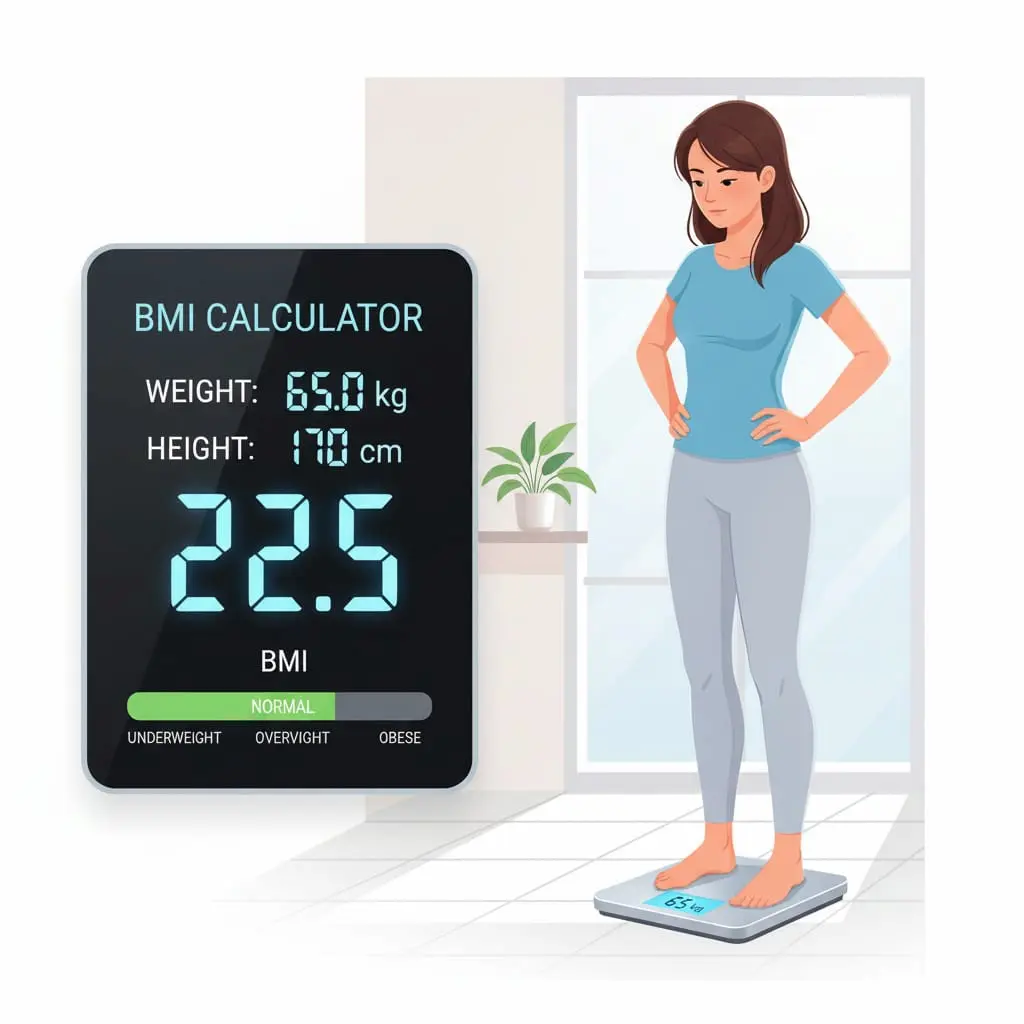
2. BMI Classification Chart
| BMI Range | Category |
| Below 18.5 | Underweight |
| 18.5 – 24.9 | Normal weight |
| 25 – 29.9 | Overweight |
| 30 – 34.9 | Obese (Class I) |
| 35 – 39.9 | Obese (Class II) |
| 40 and above | Extremely Obese (Class III) |
3. What Does Your BMI Mean?
Explain each range briefly—use a simple, positive tone (avoid medical claims).
- Underweight (BMI < 18.5): You may need to gain some healthy weight through a balanced diet and proper nutrition.
- Normal (18.5–24.9): Great! Your weight is within the ideal range for your height. Keep maintaining it with good habits.
- Overweight (25–29.9): You may need to focus on exercise and diet to reach a healthier range.
- Obese (30+): Consult a health expert for personalized advice on weight management.
- Learn more about healthy BMI ranges at the Mayo Clinic website.
4. How BMI Is Calculated
BMI is calculated using a simple formula that compares your weight to your height:
Formula (Metric Units)
BMI = Weight (kg) ÷ Height (m²)
Formula (US Units)
BMI = (Weight in pounds ÷ Height in inches²) × 703
Although the formula looks scientific, your BMI can be calculated instantly using the BMI calculator above.
This BMI calculator supports:
- US Units (lbs + feet/inches)
- Metric Units (kg + cm)
- Male/Female selection
6. Why BMI Matters: The Health Risks Behind the Number
Your BMI can reveal important clues about your long-term health.
1. Underweight (BMI below 18.5)
Risks include:
- Nutrient deficiencies
- Weak immune system
- Low muscle mass
- Fertility problems
- Higher risk of bone fractures
2. Overweight (BMI 25–29.9)
Risks include:
- Higher chances of developing insulin resistance
- High cholesterol
- Increased joint pain
- Higher body fat percentage
3. Obesity (BMI 30+)
A higher BMI may be associated with increased risk of certain health conditions such as:
- Type 2 diabetes
- High blood pressure
- Heart disease
- Stroke
- Sleep apnea
- Hormonal disorders
- Cancer risk
- Liver issues
Knowing your BMI helps you take action before these issues develop.
7. Is BMI Completely Accurate?
BMI is extremely useful, but not perfect. It has limitations, especially for:
1. Athletes / Bodybuilders
They have high muscle mass, so BMI may show overweight even when body fat is low.
2. Elderly people
Low muscle mass may make BMI look normal even with high body fat.
3. Children & teenagers
Their BMI needs age-based growth charts.
4. People with hormonal or metabolic conditions
Body fat distribution may differ.
Still, for most adults worldwide, BMI is one of the simplest and most effective tools to assess weight-related risk.
8. What Is a Healthy BMI for Men & Women?
The general BMI range is the same globally, but body composition differs slightly:
Healthy BMI for Men
- 18.5 to 24.9
Men often have more muscle mass, so their BMI may naturally be slightly higher.
Healthy BMI for Women
- 18.5 to 24.9
Women naturally store more fat for hormonal balance, pregnancy, and overall health.
9. How to Improve Your BMI Safely and Naturally
Whether your BMI is too high or too low, small changes can make a big difference.
If Your BMI Is High (Overweight or Obese)
1. Eat in a calorie deficit
You don’t need extreme dieting—just burn more calories than you consume.
2. Focus on whole foods
- Fruits
- Vegetables
- Lean protein
- Whole grains
- Healthy fats (olive oil, nuts)
3. Reduce sugary drinks
One can of soda = 140 calories
Daily? That’s 50,000+ calories per year.
4. Walk 8,000–10,000 steps/day
Walking is the easiest fat-burning exercise.
5. Strength training
Builds muscle → increases metabolism.
6. Improve sleep
Poor sleep increases hunger hormones.
7. Drink water before meals
Research shows this reduces calorie intake naturally.
10. If Your BMI Is Low (Underweight)
1. Increase healthy calories
Add:
- Nuts
- Peanut butter
- Milk
- Eggs
- Smoothies
- Potatoes
- Healthy oils
2. Strength training to build muscle
3. Eat 4–5 small meals/day
4. Check for nutritional deficiencies
Like iron, B12, and vitamin D.
5. Add protein shakes if needed
11. BMI vs. Body Fat: What’s the Difference?
BMI = Height & Weight
Body Fat % = How much fat your body contains
BMI is a simple screening tool.
Body fat percentage is more accurate but requires special machines.
For most people, BMI is enough to understand basic health risks.
12. Global BMI Standard References
- World Health Organization (WHO)
- Centers for Disease Control and Prevention (CDC)
- National Institutes of Health (NIH)
13. FAQ
Q1. What is a normal BMI?
Ans: A normal BMI is between 18.5 to 24.9.
Q2. What is the best BMI for men?
Ans: For most men, a BMI of 19–25 is considered healthy.
Q3. What is the best BMI for women?
Ans: For women, a BMI of 18.5–25 is considered healthy.
Q4. Is BMI accurate?
Ans: BMI is a widely used and generally reliable screening tool for most adults.
Q5. How can I quickly reduce my BMI?
Ans: (a) Reduce sugary foods.
(b) Walk daily.
(c) Drink more water.
(d) Control calorie intake.
(e) Sleep 7–8 hours.
(f) Small consistent changes = big results.
Q6. What BMI is dangerous?
Ans: A BMI of 30 or above may increase the risk of certain health issues. Speak with a healthcare professional for personalized advice.
Q7. How often should I check my BMI?
Ans: Once every 30–45 days is ideal.
Q8. Is BMI useful worldwide?
Ans: Yes—BMI is used globally by health organizations, hospitals, fitness apps, and doctors.
14. Final Words: Start Your Health Journey Today
Knowing your BMI is a powerful first step toward better health.
Whether your goal is to lose weight, gain weight, or maintain a healthy lifestyle, monitoring your BMI helps you make smarter decisions. Your health is in your hands.
Tip: Small lifestyle changes can make a big difference in maintaining a healthy BMI and preventing future health issues.
15. Disclaimer
Disclaimer: This BMI calculator provides general health information and should not replace professional medical advice. For personalized guidance, consult your doctor or a certified health expert.
Also Read: Castor Oil for Belly Fat: The Viral TikTok Cure or Dangerous Myth?